Catégorie : Exhibitions

  • Printmaking: Techniques & Styles

    Printmaking: Techniques & Styles

    Javier Vilató, Catalan artist and nephew of Pablo Picasso, Gisèle Deneumoustier, one of the most talented Belgian printmakers of her generation, Jindrich Zeithamml, Czech abstract sculptor and printmaker and Emmanuelle Mellot, Parisian printmaker and decorator, are the subject of very special exhibition at the Loggos municipal gallery in Paxos this summer.

    All generations and styles of printmaking, black and white and color, figurative and abstract, are represented in this show. Vilató ‘s and Mellot’s prints evoke the Mediterranean world through their luminosity, the sensuous beach bathers in the Catalan’s prints and the exuberant marine life in Mellot’s. A more romantic, mistier atmosphere pervades the prints – seascapes, trees, lovers’ beds – of Deneumoustier and also Zeithamml’s mysterious, softly luminous and symbolic shapes.

    Emmanuelle Mellot will be coming to Paxos for an artist’s residence on 13 July. She will be running two print workshops on a new press next to the exhibition at the Loggos schoolhouse for the rest of the month, the first for children and a second one for adults.

    Vilató’s prints

    Printmaking – History and Techniques:

    Printmaking is the process of making artworks by printing, usually on paper. Except in the case of monotyping, the process is capable of producing multiples of a same piece, which is called a print.
    Each print produced is not considered a « copy » but rather is considered an « original ». This is because typically each print varies to an extent due to variables intrinsic to the printmaking process, and also because the imagery of a print is not simply a reproduction of another work but rather a unique image designed from the start to be expressed in a particular printmaking technique.
    A print may be known as an impression. Printmaking is not chosen only for its ability to produce multiple impressions, but rather for the unique qualities that each of the printmaking processes lends itself to.
    Prints are created by transferring ink from a matrix or through a prepared screen to a sheet of paper or other material. Common types of matrices include: metal plates, usually copper or zinc, or polymer plates for engraving or etching; stone, aluminum, or polymer for lithography; blocks of wood for woodcuts and wood engravings; and linoleum for linocuts. Screens made of silk or synthetic fabrics are used for the screenprinting process.
    Multiple impressions printed from the same matrix form an edition. Since the late 19th century, artists have generally signed individual impressions from an edition and often number the impressions to form a limited edition; the matrix is then destroyed so that no more prints can be produced. Prints may also be printed in book form, such as illustrated books or artist’s books.

    Deneumoustier’s prints

    Techniques

    Printmaking techniques are generally divided into the following basic categories:

    • Relief, where ink is applied to the original surface of the matrix. Relief techniques include woodcut or woodblock as the Asian forms are usually known, wood engraving, linocut and metalcut.
    • Intaglio, where ink is applied beneath the original surface of the matrix. Intaglio techniques include engraving, etching, mezzotint, aquatint.
    • Planographic, where the matrix retains its original surface, but is specially prepared and/or inked to allow for the transfer of the image. Planographic techniques include lithography, monotyping, and digital techniques.
    • Stencil, where ink or paint is pressed through a prepared screen, including screenprinting and pochoir.

    Contemporary printmaking may include digital printing, photographic mediums, or a combination of digital, photographic, and traditional processes.
    Many of these techniques can also be combined, especially within the same family. For example Rembrandt’s prints are usually referred to as « etchings » for convenience, but very often include work in engraving and drypoint as well, and sometimes have no etching at all.

    Mellot’s prints

    Techniques represented in the present exhibition:

    • Etching (Vilató, Deneumoustier, Zeithamml)

    In pure etching, a metal (usually copper, zinc or steel) plate is covered with a waxy ground which is resistant to acid. The artist then scratches off the ground with a pointed etching needle where he or she wants a line to appear in the finished piece, so exposing the bare metal. The échoppe, a tool with a slanted oval section, is also used for « swelling » lines. The plate is then dipped in a bath of acid, technically called the mordant (French for « biting ») or etchant, or has acid washed over it. The acid « bites » into the metal (it dissolves part of the metal) where it is exposed, leaving behind lines sunk into the plate. The remaining ground is then cleaned off the plate. The plate is inked all over, and then the ink wiped off the surface, leaving only the ink in the etched lines.
    etching_jindrich-zeithamml-bez-nazvu.jpgetching_jindrich-zeithamml-bez-nazvu-1.jpgetching_jindrich-zeithamml-bez-nazvu-2.jpg

    The plate is then put through a high-pressure printing press together with a sheet of paper (often moistened to soften it). The paper picks up the ink from the etched lines, making a print. The process can be repeated many times; typically several hundred impressions (copies) could be printed before the plate shows much sign of wear. The work on the plate can also be added to by repeating the whole process; this creates an etching which exists in more than one state. Etching has often been combined with other intaglio techniques such as engraving (e.g., Rembrandt) or aquatint (e.g., Francisco Goya).

    • Aquatint (Vilató, Deneumoustier)

    aquatint_p.x.l._l_a_ne_et_les_trois_filles_1955_39_x_52_5_cm_eau_forte_-_aquatinte_en_couleur_edit.75_7_known_atelier_lacourie_re_paris_-_2000_euros.pngAn aquatint requires a metal plate, an acid, and something to resist the acid. Traditionally copper or zinc plates were used. The artist applies a ground that will resist acid. Ground is applied by either dissolving powdered resin in spirits, applying the powder directly to the surface of the plate. In all forms of etching the acid resist is commonly referred to as « the ground. »
    An aquatint box is used to apply resin powder. The powder is at the bottom of the box, a crank or a bellows is used to blow the powder up into the air of the box. A window allows the engraver to see the density of flowing powder and to place his plate in the box using a drawer. When the powder covers the plate, it can be extracted from the box for the next operations.
    The plate is then heated; if the plate is covered with powder, the resin melts forming a fine and even coat. Now the plate is dipped in acid, producing an even and fine level of corrosion (the « bite ») sufficient to hold ink. At this point, the plate is said to carry about a 50% halftone. This means that, were the plate printed with no further biting, the paper would display a gray color more or less directly in between white (no ink) and black (full ink).
    aquatint_1993_deneumoustier_oublier_l_ame_rique_14_60_aquatinte_34.5x49cm_250_hd.jpgAt some point the artist will then etch an outline of any aspects of the drawing he wishes to establish with line; this provides the basis and guide for the later tone work. He may also have applied (at the very start, before any biting occurs) an acid-resistant « stop out » if he intends to keep any areas totally white and free of ink, such as highlights.
    The artist then begins immersing the plate in the acid bath, progressively stopping out (protecting from acid) any areas that have achieved the designed tonality. These tones, combined with the limited line elements, give aquatints a distinctive, watery look. Also, aquatints provide ease in creating large areas of tone without laborious cross-hatching.
    A test piece may be made with etching times noted, as the strength of the etchant will vary. More than thirty minutes should produce a very dark area. Etching for many hours (up to 24) will be as dark as etching for one hour, but the deep etch would produce raised ink on the paper.

    • Drypoint (Vilató, Deneumoustier)

    drypoint_t.63_cheveux_en_pointe_se_che_1996_pointe_seche_22x16.5_cm_ed.37_5_known_papier_maraiz_1946_atelier_leblanc_paris_-_1000_euros_.pngA variant of engraving, done with a sharp point, rather than a v-shaped burin. While engraved lines are very smooth and hard-edged, drypoint scratching leaves a rough burr at the edges of each line. This burr gives drypoint prints a characteristically soft, and sometimes blurry, line quality.drypoint_t.68_fort_de_terre_et_de_mer_i_1996_pointe_seche_ed.33_1_known_16_5_x_22_cm_papier_arches_atelier_leblanc_paris_-_1000_euros_.png
    The technique appears to have been invented by the Housebook Master, a south German fifteenth-century artist, all of whose prints are in drypoint only. Among the most famous artists of the old master print: Albrecht Dürer produced 3 drypoints before abandoning the technique; Rembrandt used it frequently, but usually in conjunction with etching and engraving.

    • Burin (Vilató)

    An engraving burin is used predominantly by intaglio engravers, but also by relief printmakers in making wood engravings. Its older English name, still often used, is graver. The burin consists of a rounded handle shaped like a mushroom, and a tempered steel shaft, coming from the handle at an angle, and ending in a very sharp cutting face. It is typically held at approximately a 30-degree angle to the surface. The index and middle finger typically guide the shaft, while the handle is cradled in the palm.
    Burins typically have a square or lozenge shape face, though several other types are used. A tint burin consists of a square face with teeth, enabling the creation of many fine, closely spaced lines. A stipple tool allows for the creation of fine dots. A flat burin consists of a rectangular face, and is used for cutting away large portions of material at a time.

    • Woodcut (Vilató)

    woodblock_a.48_de_regard_a_regard_1972_36_x_36_cm_gravure_sur_bois_en_rouge_edit.35_4_known_papier_arches_e_tats_2_fequet_et_baudier_paris_1974_-_1300_euros.pngWoodcut, occasionally known as xylography, is a relief printing technique in printmaking. An artist carves an image into the surface of a block of wood—typically with gouges—leaving the printing parts level with the surface while removing the non-printing parts. Areas that the artist cuts away carry no ink, while characters or images at surface level carry the ink to produce the print. The block is cut along the grain of the wood. The surface is covered with ink by rolling over the surface with an ink-covered roller (brayer), leaving ink upon the flat surface but not in the non-printing areas.
    Multiple colors can be printed by keying the paper to a frame around the woodblocks (using a different block for each color).

    • Linocut (Vilató)

    bd_x.50_affiche_pour_la_galerie_lisie_re_reims_1982_36_x_32_cm_linogravure_edit.30_7known_fequet_et_baudier_paris_tirage_a_part_avant_la_lettre_-_1200_euros_-_copie_2.png Linocut is a printmaking technique, a variant of woodcut in which a sheet of linoleum is used for the relief surface. A design is cut into the linoleum surface with a sharp knife, V-shaped chisel or gouge, with the raised (uncarved) areas representing a reversal (mirror image) of the parts to show printed. The linoleum sheet is inked with a roller (called a brayer), and then impressed onto paper or fabric. The actual printing can be done by hand or with a press. Since the material being carved has no directional grain and does not tend to split, it is easier to obtain certain artistic effects with lino than with most woods, although the resultant prints lack the often angular grainy character of woodcuts and engravings.

    • Vernis mou or soft ground etching (Deneumoustier)

    This is a particular variety of etching; instead of covering the surface with the usual resin, the artist spreads a composition of warmed resin and tallow using a brush or roller, creating a softer ground.
    He than places a thin sheet of paper on the plate and draws on it with a sharp pencil. Under the pressure the soft wax sticks to the back of the paper, and comes off with it when the sheet of paper is removed.

    • Mezzotint (Deneumoustier)

    An intaglio variant of engraving in which the image is formed from subtle gradations of light and shade. Mezzotint—from the Italian mezzo (« half ») and tinta (« tone »)—is a « dark manner » form of printmaking, which requires artists to work from dark to light. To create a mezzotint, the surface of a copper printing plate is roughened evenly all over with the aid of a tool known as a rocker; the image is then formed by smoothing the surface with a tool known as a burnisher. When inked, the roughened areas of the plate will hold more ink and print more darkly, while smoother areas of the plate hold less or no ink, and will print more lightly or not at all. It is, however, possible to create the image by only roughening the plate selectively, so working from light to dark.
    Mezzotint is known for the luxurious quality of its tones: first, because an evenly, finely roughened surface holds a lot of ink, allowing deep solid colors to be printed; secondly because the process of smoothing the texture with burin, burnisher and scraper allows fine gradations in tone to be developed. The mezzotint printmaking method was invented by Ludwig von Siegen (1609–1680). The process was used widely in England from the mid-eighteenth century, to reproduce oil paintings and portraits.

    • Intaglio (Mellot)

    2000_mellot_les_cornets_18_image_23_5x19_5_cm_-_copie-2.jpgIn intaglio printing, the lines to be printed are cut into a metal plate by means either of a cutting tool called a burin, held in the hand – in which case the process is called engraving; or through the corrosive action of acid – in which case the process is known as etching. In etching, for example, the plate is covered in a resin ground or an acid-resistant wax material. Using an etching needle, or a similar tool, the image is engraved into the ground, revealing the plate underneath. The plate is then dipped into acid. The acid bites into the surface of the plate where it was exposed. Biting is a printmaking term to describe the acid’s etching, or incising, of the image. After the plate is sufficiently bitten, the plate is removed from the acid bath, and the ground is removed to prepare for the next step in printing.
    To print an intaglio plate, ink is applied to the surface by wiping and/or dabbing the plate to push the ink into the recessed lines, or grooves. The plate is then rubbed with tarlatan cloth to remove most of the excess ink. The final smooth wipe is often done with newspaper leaving ink only in the incisions. A damp piece of paper is placed on top of the plate, so that when going through the press the damp paper will be able to be squeezed into the plate’s ink-filled grooves. The paper and plate are then covered by a thick blanket to ensure even pressure when going through the rolling press. The rolling press applies very high pressure through the blanket to push the paper into the grooves on the plate. The blanket is then lifted, revealing the paper and printed image.

    • Lithography (Mellot)

    2002_mellot_poisson_et_son_squelette_image_27x38_cm.jpg.jpg_-_copie-3.jpg Lithography is a technique invented in 1798 by Alois Senefelder and based on the chemical repulsion of oil and water. A porous surface, normally limestone, is used; the image is drawn on the limestone with a greasy medium. Acid is applied, transferring the grease to the limestone, leaving the image ‘burned’ into the surface. Gum arabic, a water-soluble substance, is then applied, sealing the surface of the stone not covered with the drawing medium. The stone is wetted, with water staying only on the surface not covered in grease-based residue of the drawing; the stone is then ‘rolled up’, meaning oil ink is applied with a roller covering the entire surface; since water repels the oil in the ink, the ink adheres only to the greasy parts, perfectly inking the image. A sheet of dry paper is placed on the surface, and the image is transferred to the paper by the pressure of the printing press. Lithography is known for its ability to capture fine gradations in shading and very small detail.
    A variant is photo-lithography, in which the image is captured by photographic processes on metal plates; printing is carried out in the same way.

  • Still Lifes, Landscapes & Fish

    Still Lifes, Landscapes & Fish

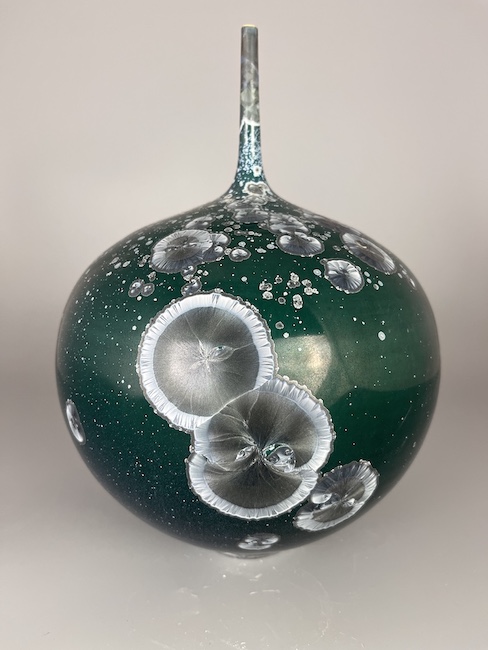
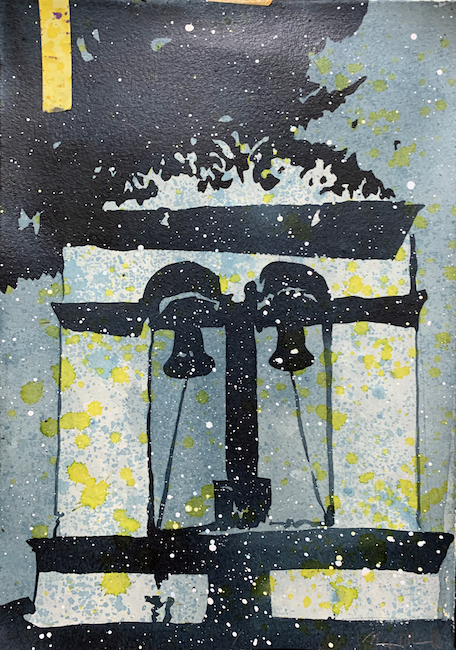
    Our summer season in Paxos opens with an exhibtion with art by Ronald Bowen (USA), David Loeb (USA), Margaret McCann (USA), Jorge Rodriguez de Rivera (Spain), Nicola Villa (Italy) and ceramics by Emmanuelle Mellot (France) and Simone Perrotte (France).

    Chris Boïcos and Sofia Kouva:
    dsc_0004.jpg
    Gaios gallery, June 2015 show:
    dsc_0012.jpg
    Ceramics by Emmanuelle Mellot, paintings and pastels by David Loeb:
    dsc_0027.jpg
    Drawings by Ronald Bowen, painting by Margaret McCann:
    dsc_0015.jpg
    Fish relief by Nicola Villa:
    dsc_0017.jpg
    Collages by Jorge Rodriguez de Rivera, porcelain by Simone Perrotte:
    dsc_0023.jpg
    Window with porcelain by Simone Perrotte:
    dsc_0038.jpg
    Colored pencil drawings by Ronald Bowen:

    Paintings and pastels by David Loeb:

    Painting by Margaret McCann:

    Collages by Jorge Rodriguez de Rivera:

    Reliefs and paintings by Nicola Villa:

    Ceramics by Emmanuelle Mellot:

    Porcelain by Simone Perrotte:

  • Controluce – Nicola Villa

    Controluce – Nicola Villa

    villa_invitation_mail.png

    The exhibition:

    Controluce (« Against light ») is an exhibition of urban figures and crowds from a variety of cities, New York, Paris, Brussels and Nice. Painting, watercolor, collage and printmaking often in combination, are the techniques through which the artist interprets and fixes his most recent impressions of the contemporary city.

    Michele Tavola, curator of the exhibition:
    « The Italian artist and printmaker Nicola Villa combines the technical ability of an old master with the gaze of a modern observer who lives and breathes in the contemporary urban tissue … His inspiration comes from everyday life and the will to see and interpret reality from a modern vantage point. The city is the perfect social aquarium, the ideal place for observation and elaboration of images that tell stories, that speak of us, of today, stories that compel and interrogate our experience. »
    controluce_1.png
    controluce_2-2.png

    The artist:

    nicola-mario1_-_copie.jpg

    Nicola Villa was born in 1976 in Lecco, a small town in Lombardy on lake Como in Italy, where he began drawing and painting as a young boy. He went on painting through his studies at the prestigious Milan Polytechnic from which he received his architectural diploma in 2004. He, however, chose art over architecture as a vocation and pursued his artistic studies by studying printmaking in the best printing workshops in Milan: Linati, Pierluigi Puliti, Giorgio Upiglio and at Arte Tre with Alberto Serighelli, the printmaker for Michelangelo Pistoletto and Mimo Palladino. In 2007 he was part of the first group of Italian artists to be invited by the Harlem Studio Fellowship for a year’s residence in New York. He received the prestigious Celeste prize for his work inspired by Harlem.

    villa_harlem_1.png
    villa_harlem_2.png

    He is one of six Italian artists – including Mimo Paladino, Nicola de Maria, Ettore Spalleti, Nicola Samorì and the photographer Giovanni Chiaromonte – chosen by Cardinal Dionigi Tettamanzi in 2011 to illustrate a contemporary edition of the four gospels, the Nuovo Evangeliario Ambrosiano for the cathedral of Milan.

    villa_evangelario.png

    Today the artist works in a great studio in a beautiful baroque building in the old town of Genoa in Liguria. He exhibits his art regularly in galleries and art fairs in Italy, France and Great Britain.

    villa_studio.png

    The art:

    Nicola Villa never quite forgot his years as a student of architecture at the Milan Polytechnic. Though the human figure is very much at the center of his art, the passers-by observed in the streets of his hometown, Genoa, or in the towns he visits on his many trips abroad, are always inserted into a geometric framework and the ambient light of a subtly indicated urban framework. The inhabitants of Harlem, the businessmen of Milan in their sharp suits and the aging prostitutes of the port of Genoa, are all integrated into the spaces of their respective cities. They « structure » by their presence, whether static or on the move, the surrounding urban environment and reflect the varied sociology and constant flux of the modern city. Nicola Villa takes up the study of the modern city where Impressionist artists like Renoir or Monet, or early 20th century painters like George Bellows or Walter Sickert left off. His, is a resolutely modern form of Impressionism, whose graphic style is reminiscent of the 1960s, combining classic techniques – aquatint, paint on canvas and watercolor – with contemporary imagery – photography, collage and digital fragmentation.

    villa_art.png

    The curator:

    michele_-_san_fedele_-_copie_2.jpg

    Michele Tavola was born in Lecco in Lombardy in 1973. After his graduation in literary studies from the University of Milan, he obtained a scholarship to study at the Fondazione Longhi and the Scuola di Specializzazione in storia dell’arte in Florence. He received his doctorate in the history of art at the University of Turin. He has worked as art critic for Radio Popolare di Milano and the daily newspaper La Repubblica. Author of an important manual and dictionary of the of the history of art for the publisher Alpha Test, he was also a member of the scientific committee of the review Art App and the San Fedele art prize in Milan.He is currently director of the collection Impronte – monografie d’arte digitali for the publisher Emuse, and author for the same collection of a monograph on Joan Miró as well as the following titles: La poesia della pittura, Michelangelo, La potenza della forma, Picasso incisore, L’avventura del segno. He has curated numerous exhibitions for Italian museums and galleries featuring, notably, the works of Goya, Picasso, Matisse, Miró, Chagall, Dubuffet and Rouault. From 2010 to 2015 he was the municipal councilor for culture and director of the art museum of the city of Lecco.

    Le Huit:

    Founded in 2012, Le Huit, is a new art space in the 10th arrondissement in Paris, the result of the collaboration of ten young people from the milieus of art, literature and communication: Mayli Grouchka, Léo Cogos, Théodore Famery, Eliot Leblanc, Louis Ziegle, Sonia Ye, Ethan Assouline and Cécile Malgouyres.
    Its aim is to bring a breath of spontaneity and fresh air in the often humdrum and unadventurous contemporary Paris art scene. Le Huit hosts more or less ephemeral exhibitions and happenings that last a few days, a week or a month by artists from a great variety of backgrounds. « We noticed that many young creators in mixed media were looking for a dynamic space more supple and flexible than the traditional galleries ». Fashion shows by the group D.Time’s, satirical cartoons by de the blog writer Tiffany Cooper, group shows by art students held for the Huit Thursdays, but also art dinners and pop-up conceptual boutiques are all held at Le Huit. Every event is new or unprecedented and contributes to the steady advance of the cultural art scene of Right Bank Paris further north to the Great Boulevards, between République and Strasbourg-Saint Denis.

    Léo Cogos, Cécile Malgouyres, Eliot Leblanc, Théodore Famery:

    le_huit.png
    le_huit_2.png
    .

    .

    .

    .

    .

    .

    .

    .

    .

    .

    .

    .

    .

    .

    .

    .

    .

    .

    .
    .

    .

    .

    .
    .

    Place: Le Huit, 8 boulevard Saint-Martin 75010 Paris
    Metro: Strasbourg-Saint Denis or République

    Dates: 12 – 24 May 2015
    Opening Hours: Monday – Friday, 14h – 19h / Saturday and Sunday, 11h – 19h
    .
    .
    .
    Controluce – Urban Spaces and Figures:

    Controluce – Figures in the City:


    Conroluce – Faces:

    Controluce – Urban Tales, prints:

    Controluce – Oils on canvas:

  • Jean-Christophe Ballot – Les Dormeurs de Saint Denis

    Jean-Christophe Ballot – Les Dormeurs de Saint Denis

    jean-christophe_ballot_g._coninx.jpg

    (Jean-Christophe Ballot) is one of the best architectural and museum photographers In France today.
    www.jcballot.com

    Among his numerous photographic campaigns, the best known are undoubtedly that at the musée du Louvre during the great renovations of the 1990’s, the musée Rodin, the Renault factory at Boulogne-Billancourt before its demolition, the renovations of the musée de l’Orangerie, the Bibliothèque nationale de France at the historical Richelieu building or the celebrated Susse foundry.

    His latest series of photographs, Les Dormeurs de Saint Denis, of the celebrated French royal tombs in the basilica of the abbey of Saint Denis, north of Paris, will be exhibited in an exceptional setting, the 17th century church of the Billettes in the heart to the Marais in Paris.

    The series was commissioned by the Centre des Monuments Nationaux and photographed in the spring of 2014.

    unnamed2-2.jpgunnamed5-2.jpgunnamed4-2.jpg

    One of the finest Baroque churches in Paris to survive the French Revolution the church of the convent of the Billettes on rue des Archives was designed in the mid- 18th century by the last of the celebrated Mansart family of architects, Jacques Hardouin-Mansart de Sagonne (1711-1778).

    unnamed3-2.jpgunnamed-2.jpg

    Today the church it is the principal Lutheran temple of city of Paris.

    The black and white photographs of the gisants (recumbent effigies) and orants (praying figures) of the Kings and Queens of France will be presented in two triptych compositions in the choir of the church, as single large prints on the pilasters of the nave and in smaller formats in the south gallery of the church.

    The statues were photographed so as to look like live figures, contemplative when kneeling or asleep when recumbent. In the twilight of the beautiful Gothic architecture of the basilica of Saint Denis they take on an otherworldly, dreamy dimension, delicately balanced between the inanimate quality of stone and bronze and the animating quality conferred on them by the shadowy light. The classical architectural setting of the church of the Bilettes and the filtered daylight and shadows of the church provide the perfect background for the contemplation of Jean-Christophe Ballot’s photographs emphasizing their mysterious and spiritual quality.

    Organization and visits

    The exhibition, sponsored by the Lutheran Temple of the Billettes and Chris Boïcos Fine Arts, will be open to the public Tuesday though Saturday from Wednesday 11 to Saturday 28 March from 2 to 7 pm at 24 rue des Archives, 75004 Paris (Métro Hôtel- de-Ville). It is presented by
    Protestantisme et Images as part of the cultural events of the Christian Marais.

    Guided visits
    Jean-Christophe Ballot and Chris Boïcos will be on site to welcome you and comment on the exhibition on Saturday 14, 21 and 28 March and Thursday 26 March between 3 and 5 pm.

    Sale of the Works
    All photographs are on sale by Chris Boïcos Fine Arts. Price lists will be available at the exhibition and can obtained by contacting Chris Boïcos (+33 (0) 686 58 98 09 – christophe@boicosfinearts.com).

    Practical Information
    Dates : Wednesday 11 March to Saturday 28 March.
    Open Tuesday to Saturday from 2 to 7 pm.
    Free entrance.

    Place: Eglise des Billettes,
    24 rue des Archives,
    75 004 Paris.
    Métro : Hôtel de Ville

    Contacts :
    Christophe Boïcos : + 33 (0) 686 58 98 09 – christophe@boicosfinearts.com
    Twitter : @BoicosGallery – http://boicosfinearts.com/
    Presse : Agence Charles & Compagnie – 15, rue Ambroise Thomas 75009 Paris – 06 07 59 17 55 – charles@charlesetcompagnie.fr

    Artist’s Statement:

    Avec Les dormeurs St Denis je développe une réflexion photographique sur l’idée du passage. Passage à travers le réel et le rêve (le sommeil), la vie et le trépas (la mort). Pour le croyant, la mort ne sera qu’un passage.

    Cette nouvelle série de photos explore la représentation de la mort dans le statuaire funéraire historique. La question de l’existence de la vie éternelle n’est pas posée, mais est au contraire affirmée par les commanditaires et les artistes des tombeaux royaux et la société de leur époque.
    Cette affirmation sereine de l’existence d’une vie éternelle questionne forcément le doute qui habite l’homme contemporain.

    Dans mes photos j’ai voulu entretenir le doute entre le vivant et l’inanimé. Je ne photographie pas des statues, mais des personnes. J’aborde ce travail comme du portrait. François 1er ou Catherine de Médicis sont là, ils posent devant mon objectif. Ils sont vivants.

    La dimension spirituelle habite toujours mon regard sur le monde : la grâce est juste là, à fleur de pierre, à fleur de peau…

    Jean-Christophe Ballot
    février 2014

    Saint Denis funerary monuments photographed by Jean-Christophe Ballot:

    Charles Martel (688-741)

    Carloman 1er, King of the Francs (751 – 771) and Ermentrude first wife of Charles the Bald (830 – 869)

    Robert II le Pieux (972 – 1031)

    Henri Ier (c .1008 -1060)

    Berthe de Hollande (1055 – 1093)

    Constance de Castille (c. 1136 – 1160)

    Blanche de France (1328 -1393)
    Execution: 1390. By Jean de Liège and Robert Loisiel

    Philippe IV le Bel (1268 -1314)
    Execution: c. 1392.

    Jacques Longuejoé , Grand prieur of Saint-Denis
    Execution: Early 15th century

    Louis d’Orléans : (1392 – 1407)
    Execution: 1502 – 1516. Monument by Michele Aria, Donnato Di Battista Benzi, Benedetto Di Rovezzano, Girolamo Di Viscardo

    Louis XII (1462 – 1515) and Anne de Bretagne (1477-1514)
    Execution: 1515-1531. Attributed to Jean Juste and family, gisants and priants possibly by Guillaume Regnault.

    François Ier (1494 – 1547) and Claude de France (1499-1524)
    Execution: 1548 – 1559. By Philibert de l’Orme.

    Louis XVI (1754 – 1793) Marie Antoinette (1755 – 1793)
    Execution: 1830. By Edme Gaulle and Pierre Petitot.

    All photographs (numbered and signed editions of 9) are on sale, price is by format:
    40 x 60 cm : 1300€
    60 x 90 cm : 2300 €
    80 x 120 cm : 3400 €
    100 x 150 cm : 4500 €

    A special porfolio of 27 of the photographs (edition of 9, format: 31 x 46 cm) is also available:
    1 portfolio photograph: 750 €
    10 portfolio photographs: 6750 € ( 10% discount)
    20 portfolio photographs: 12 000 € (20% discount)
    27 portfolio photographs: 14 850 € (27% discount)

    Tomb of Louis XII and Anne de Bretagne

    Tomb of François 1er and Claude de France

    Tomb of Henri II and Catherine de Medici

    Tomb of Louis XVI and Marie Antoinette

    Other tombs

    Sculpted Drapery

    Triptychs

    Issenheim Altarpiece by Matthias Grünewald

    The Saint Denis funeral monuments are also visible on the French National Monument website:

    www.regards.monuments-nationaux.fr/fr/spotlight/5896/page/1

  • Fotofever Paris 2014

    Fotofever Paris 2014

    Chris Boïcos Fine Arts was part of the first edition of Fotofever, the new Paris photo fair, at the Espace Cardin in 2011 and also at the Brussels edition in 2012.
    For the 2014 edition of Fotofever the theme of our stand will be « Collage ».
    We will be exhibiting photographic collages by three gallery artists:
    Jorge Rodriguez de Rivera – Douglas Stapleton – Vivian van Blerk


    Place: Carrousel du Louvre – 99 rue de Rivoli – 75001 Paris
    Métro: Palais-Royal/Musée du Louvre

    Fair Hours:
    Private view by invitation only on Thursday 13 November 2014, from 5 to 10 pm
    For free invitations for Thursday and Friday, please contact Chris Boïcos at contact@boicosfinearts.com

    Friday 14 November: 10am – 8pm
    Saturday 15 November: 10am – 8pm
    Sunday 16 November: 10am – 7pm


    Collage
    was first used in the art world in the early 20th century in the work of the Dada artists and the Surrealists (Ernst, Haussmann, Höch, Bayer…). Classic collage is still important in the contemporary art scene despite the advent of new digital techniques for the compilation and transformation of photographic images like Photoshop.
    One of our objectives in this exhibition is to demonstrate the ongoing importance, indeed renaissance, of mechanical and manual techniques in contemporary photography despite the advent of the digital age.


    Our artists will be presenting photographic collages in three distinctive techniques:

    Jorge Rodriguez de Rivera:
    Collage of figures, plants, animals or still lives, cut out from illustrations of art magazines and the French auction house magazine, the Gazette de Drouot, pasted on to photographs of urban landscapes taken by the artist.


    Douglas Stapleton:
    Collages of images of works of art – sculptures and paintings – cut out from old art history books and magazines, assembled and juxtaposed in strange or witty configurations against a neutral background.

    Vivian van Blerk:
    Black and white photographic prints by the artist are re-photographed in combination with found objects, sculptures and architectural models, also made by the artist, in his studio. The resulting single photographic negative of assembled and juxtaposed elements is then hand tinted in brilliant and artificial colors and printed.


  • Landscapes & Myths II

    Landscapes & Myths II

    Many of the artists in this exhibition live or have worked on the island of Paxos.
    Each in his own style an sensibility has responded to the beautiful nature and luminocity of the island. Some focus more on its villages, olive groves and seascapes, while others se in the present traces of the past. Reality and illusion, past and present, nature and art, mix in this rich exhibtion by contemporary creators. Artists from a great varity of backgrounds and cultures have come together to pay homage to the most beautiful island of the Ionian sea – Paxos.

    Chris Boïcos, Pavlos Habidis and Faye Lychnou at the opening of the show, August 3:

    landscapes_and_myths_ii_chris_pavlos_faye_-_copie.jpg landscapes_and_myths_ii_books_at_loggos_-_copie.jpglandscape_and_myths_ii_schoolhouse_greco_-_copie.jpg

    .Artists : Jean-Christophe Ballot (France), Isabelle Bonte (France), Hélène Dalloz-Bourguignon (France), Canan Cankaya (Turkey), Ettore Greco (Italy), Misha Goro (USA), Pavlos Habidis (Greece), Jerôme Hirson (France), David Loeb (USA), Kallia Kouva (Greece), Mayka (Venezuela), Emmanuelle Mellot (France), Mathieu Norwood (France), Pascal Oudet (France), Fathi Oulad (France), Angelos Panayiotidis (Greece), Chloe Peytermann (Switzerland), Jorge Rodriguez de Rivera (Spain), Pilar Saltini (Italy), Douglas Stapleton (USA), Gabriel Stauffer (France), Sandrine Tonnelier (France), Vasilis (Greece), Vivian van Blerk (South Africa), Patricia Vieljeux (France), Nicola Villa (Italy)

    Landscapes & Myths II ” – a series of art exhibitions organized by Chris Boïcos Fine Arts, Faye Lychnou and the Municipality of Paxos, in August, in four locations in Paxos:

    – The Old Schoolhouse of Loggos (daily 8 to 11 pm)- The Municipal picture gallery in the former customs house of Loggos (daily 8 to 11 pm)
    – The Municipal Council meeting hall in Gaios – works by Vasilis – (daily 7 to 11 pm)
    Chris Boïcos Fine Arts gallery in the central street of Gaios (daily 11am to 1pm and 8 to 11pm)

    The exhibitions open on 3 August 2014 in Loggos with a book signing
    at the Loggos customs house of
    A Journey to Paxos”, a book of 83 watercolors by the Athenian artist Pavlos Habidis.

    The four exhibitions will be open from 3 August to 5 September 2014.
    .

    .

    .

    .

    .

    .

    .
    .

    Paxos Watercolors 2012 – 2013 by Pavlos Habidis:

    Dieu et Dionysos – Paxos olive trees by Jean-Christophe Ballot

    Diana and Venus – Louvre sculptures by Jean-Christophe Ballot

    The Niobids, Villa Medici, Rome – by Jean-Christophe Ballot

    Ovid’s Metamorphoses by Vivian van Blerk

    Marine paintings by Pilar Saltini

    Paxos landscapes and marines by David Loeb

    Mythological paintings and still lives by David Loeb

    Poseidon watercolors by Nicola Villa

  • Poseidon

    Poseidon

    At Boïcos Fine Arts Gallery, Central street Gaios, Paxos.

    Poseidon fell in love with Amphitrite the most beautiful of the Nereids who hid in a cave to escape the god’s attentions. Dolphin, however, revealed her hiding place to his friend Poseidon. The god abducted the shy beauty and carried her off on his chariot to Corfu. There he struck the ground with his trident cutting off the southern tip of Corfu and creating a separate island, Paxos, where he spent his honeymoon with Amphitrite. He lost, however, his trident in the sea where it was found by the Paxiots, who made it their emblem.

    Our artists, inspired by the island and the myth, have created the works for this exhibition in honor of Paxos and its founder, the Sea God.

    image-2.jpg
    Artists: Isabelle Bonte, Ettore Greco, Jérôme Hirson, David Loeb, Fathi Oulad, Jorje Rodriguez de Rivera, Douglas Stapleton, Patricia Vieljeux, Nicola Villa, Vivian van Blerk