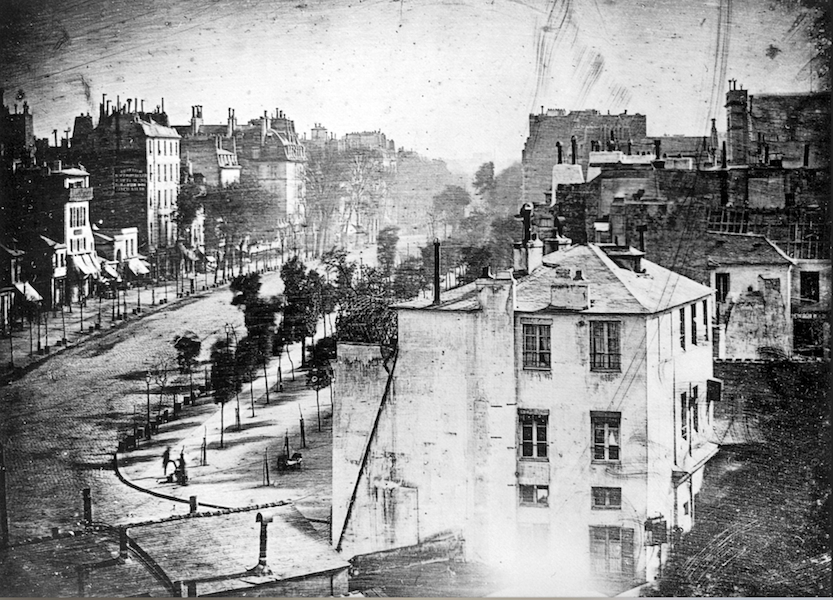
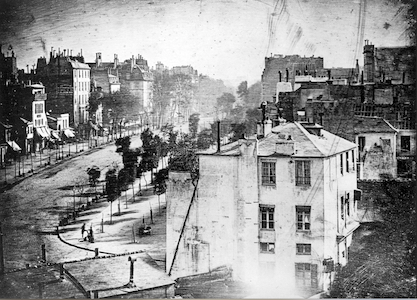
 Louis-Jacques-Mandé Daguerre first photographed the Paris skyline using his new photographic process, which was named after him – the daguerreotype – in 1838. Since then Paris has become the most photographed city in the world by amateurs and professionals alike. From Nadar and Atget to Ilse Bing, Brassai, Cartier-Bresson, Doisneau, Irving Penn, Sabine Weiss to Martin Parr or Bruce Gilden, there is hardly a great name in photography who did not, at one time or other, aim his or her lens on the city of light.
Yet each generation of photographers has also created its own vision of the city and its inhabitants, revealing the architectural and social evolutions of the urban fabric through time, while also responding to the stylistic and technical evolutions of photography itself. In many ways Paris, which witnessed its birth, and photography are inextricably linked.
Paris Fragments brings together two current photographers of Paris and a collage artist – Jean-Manuel Simoes, Robert Bared and Jorge Rodriguez de Rivera. One of the aims of the exhibition is to reveal a specifically contemporary sensibility in the depiction of Paris that emphasizes fragmentation.
Louis-Jacques-Mandé Daguerre first photographed the Paris skyline using his new photographic process, which was named after him – the daguerreotype – in 1838. Since then Paris has become the most photographed city in the world by amateurs and professionals alike. From Nadar and Atget to Ilse Bing, Brassai, Cartier-Bresson, Doisneau, Irving Penn, Sabine Weiss to Martin Parr or Bruce Gilden, there is hardly a great name in photography who did not, at one time or other, aim his or her lens on the city of light.
Yet each generation of photographers has also created its own vision of the city and its inhabitants, revealing the architectural and social evolutions of the urban fabric through time, while also responding to the stylistic and technical evolutions of photography itself. In many ways Paris, which witnessed its birth, and photography are inextricably linked.
Paris Fragments brings together two current photographers of Paris and a collage artist – Jean-Manuel Simoes, Robert Bared and Jorge Rodriguez de Rivera. One of the aims of the exhibition is to reveal a specifically contemporary sensibility in the depiction of Paris that emphasizes fragmentation.
Jean-Manuel Simoes
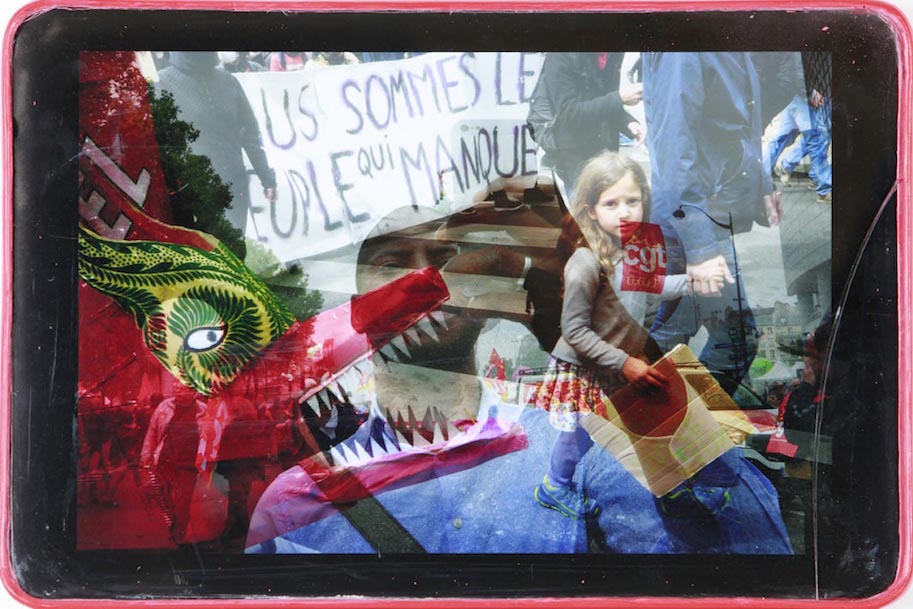 As a press reporter and street photographer Jean-Manuel Simoes is most attuned to the accelerating pace of urban life in Paris and the impact of the extraordinary flood of instant photography unleashed by the advent of the Smartphone. In the three distinct photographic series presented in Paris Fragments Simoes explores the increasingly instant nature of perception and reactivity in modern city life.
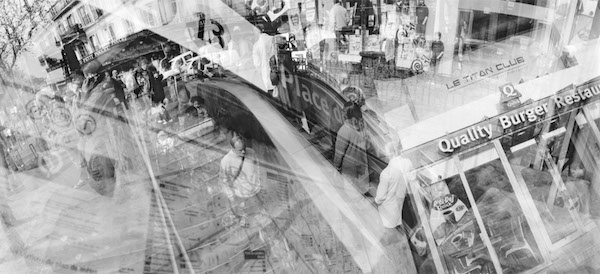
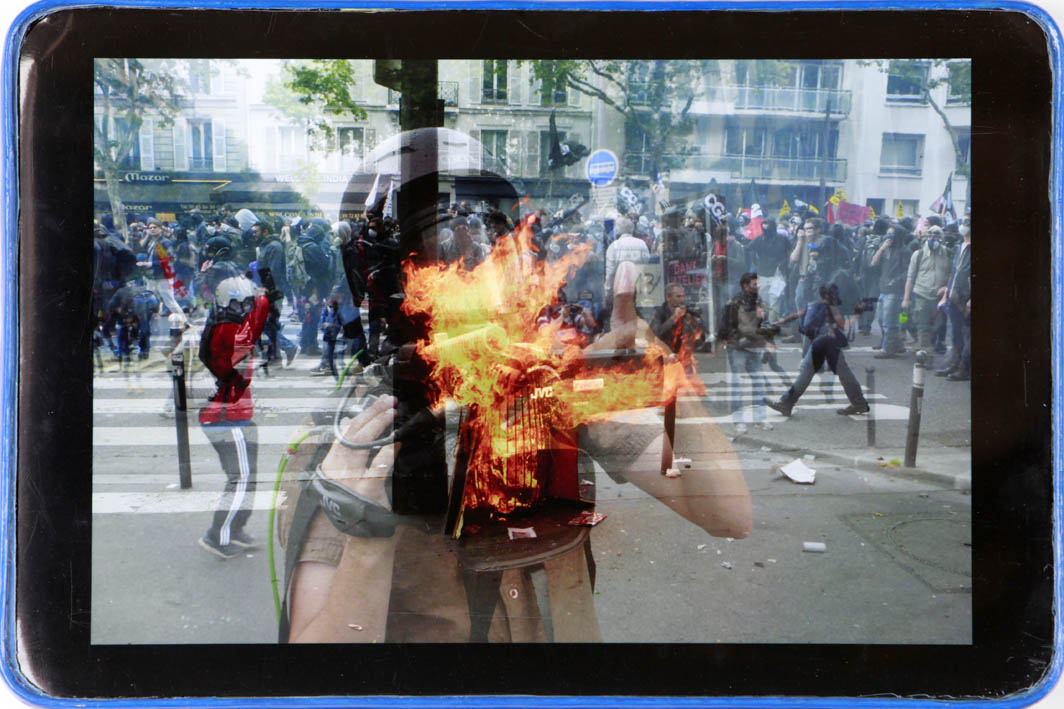 Superposition of multiple images is used in the urban scenes of ParisNomics and in the Show Must Go On, where demonstrators, rioters and witnesses blend into a multiple, fragmented vision of urban tension.
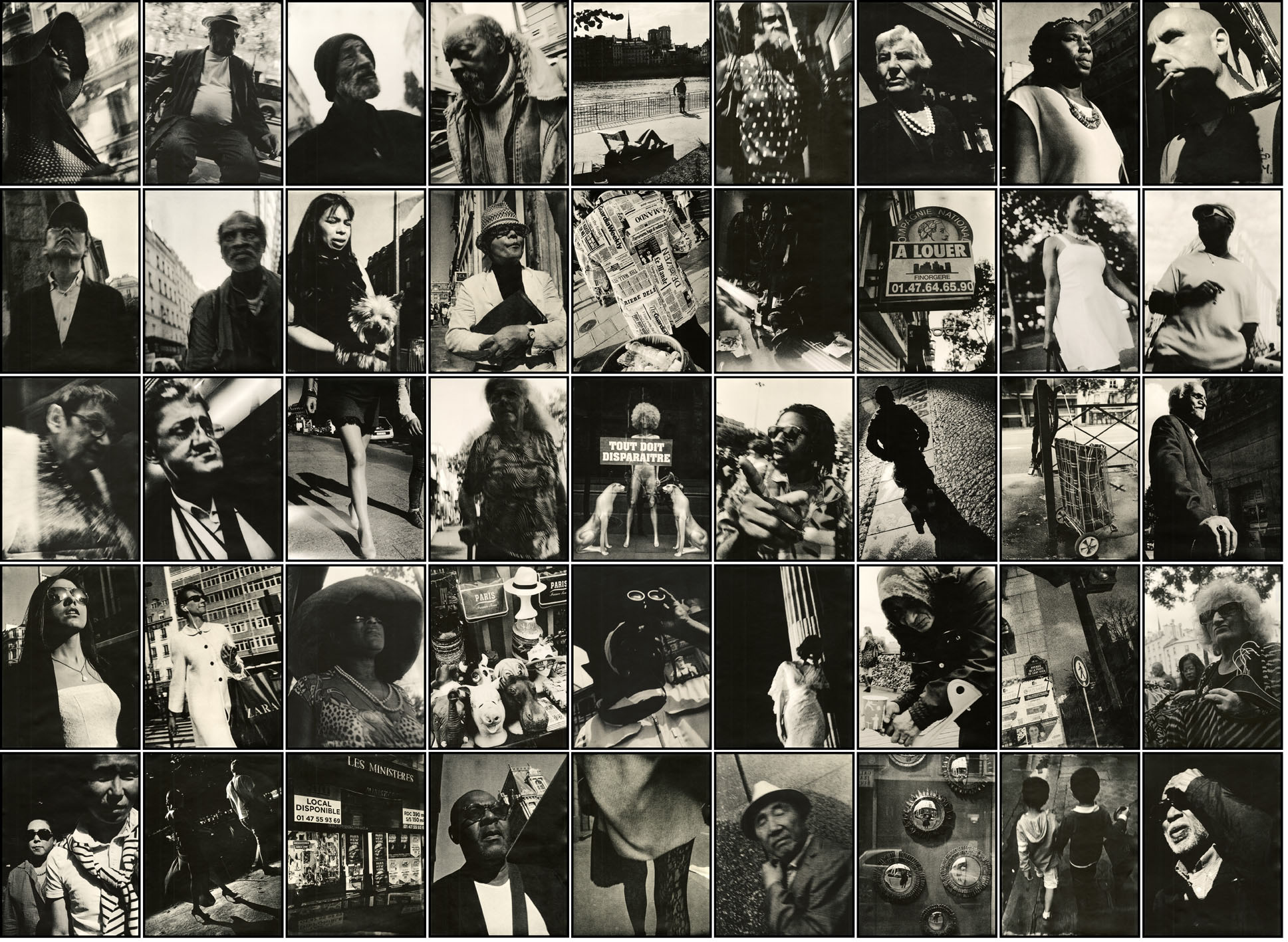
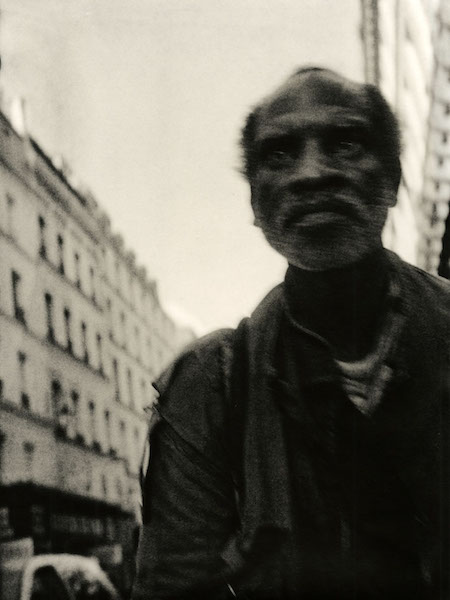 His latest series, Paris Kaleidoscope 2018, is constructed by the “stolen” shots of movingly ordinary, self-absorbed Parisians of all classes hurrying past in the city streets.
Robert Bared
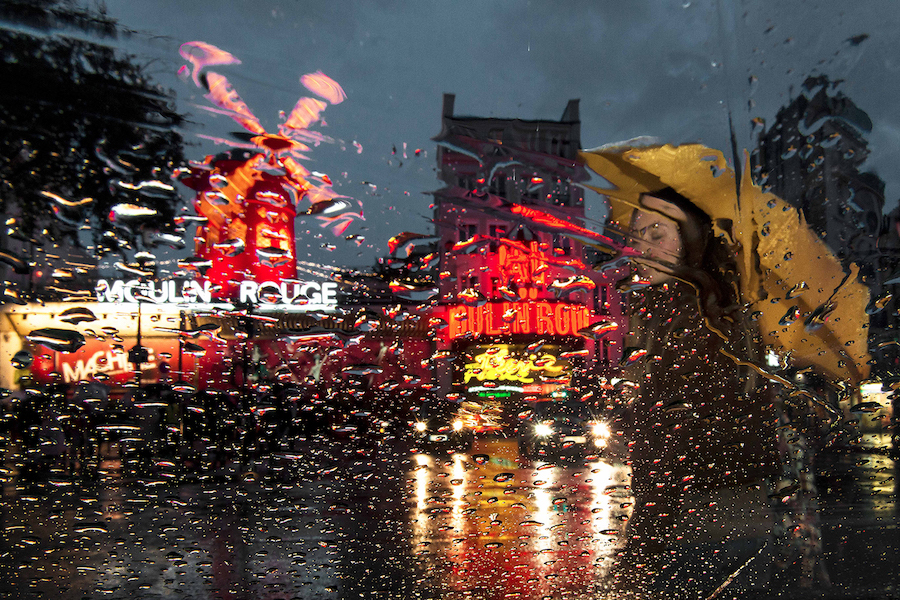 Robert Bared brings a different and more romantic sensibility to his shots of Paris. In his own words: “A certain ideal of harmony distances me from brute and neuralgic reality or any type of purely mental research”. Though he photographs famous Paris sites and historic districts, he does so in a manner which is fresh and highly original.
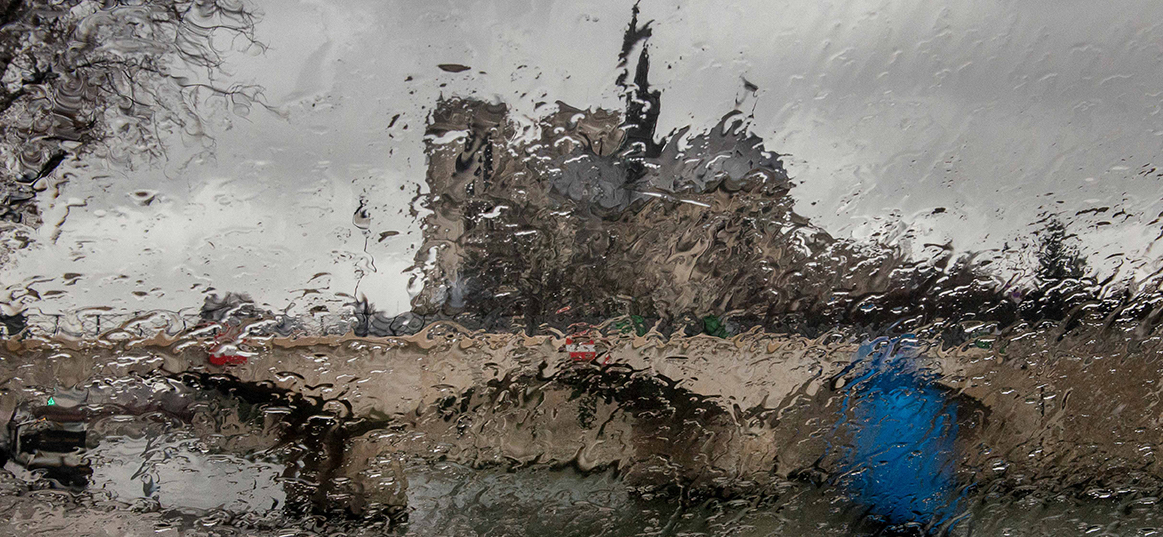
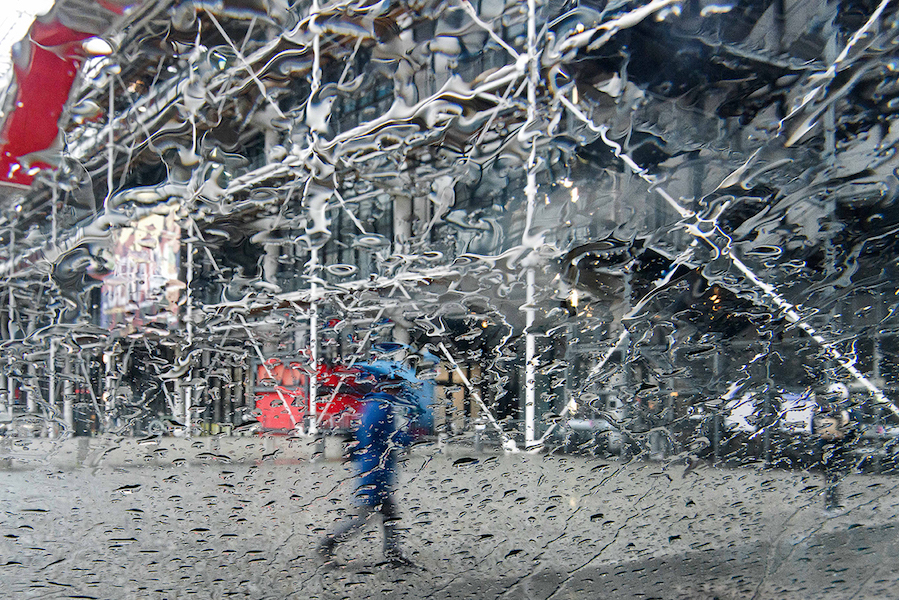 Shooting through the rain-splattered windshield of a parked car, Bared distorts architectural shapes, lights and passing figures creating a vision of fragmentary, fleeting, beauty hovering delicately between photography and a painterly Impressionist vision. This is an interiorized, personal response to the city, quite the opposite of Simoes’ extraverted, belligerent vision of the Paris streets.
Jorge Rodriguez de Rivera
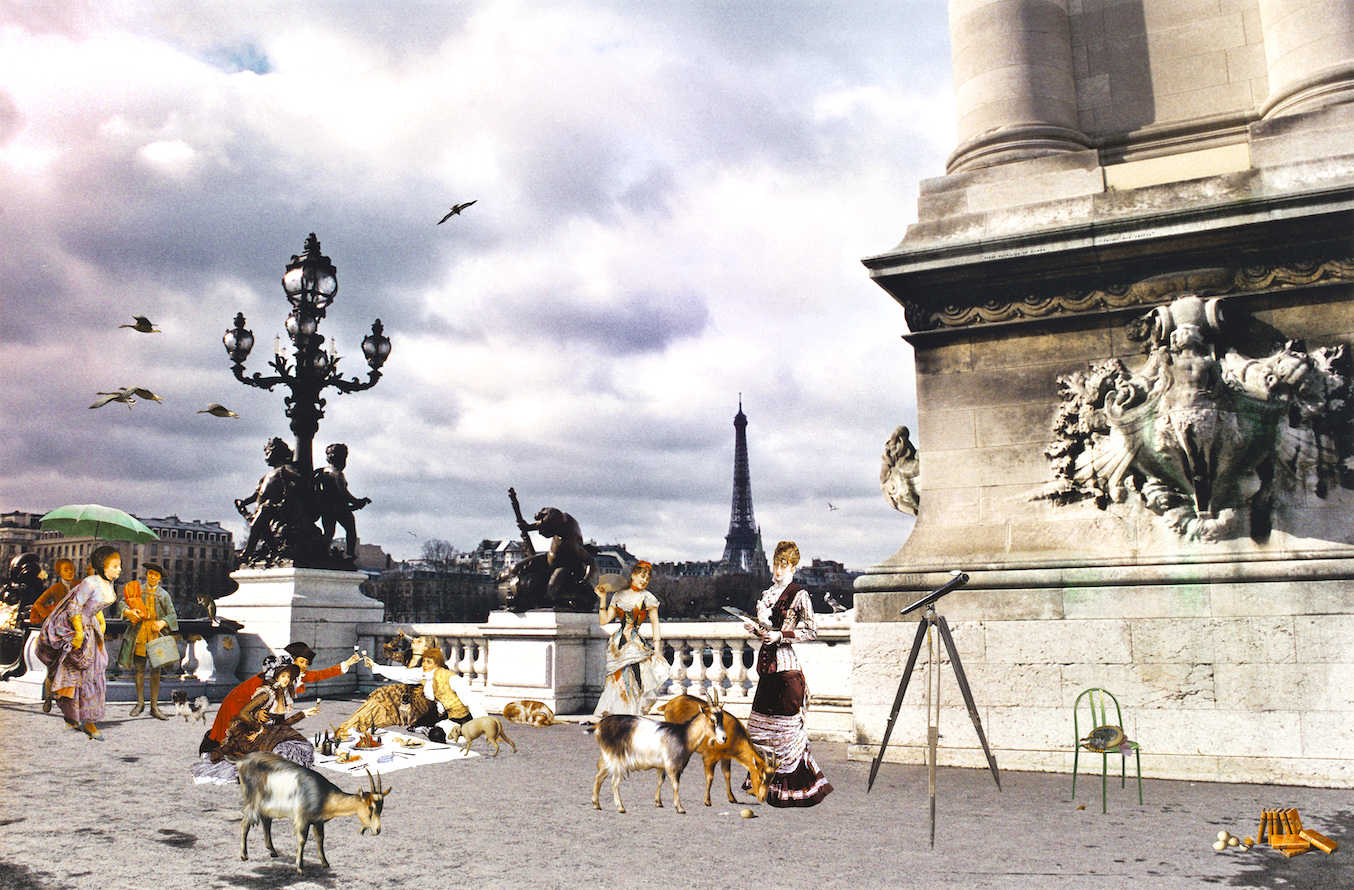
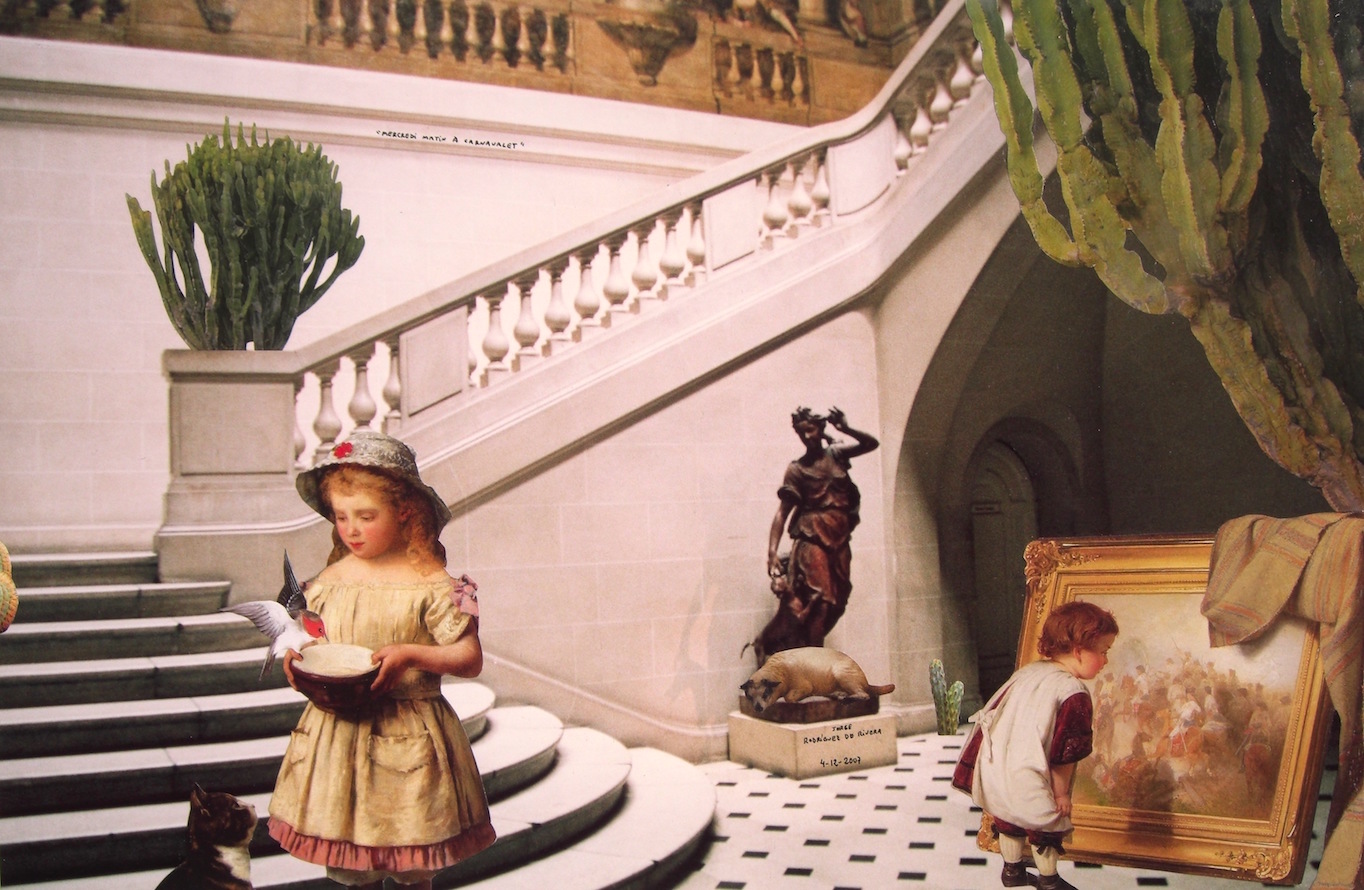
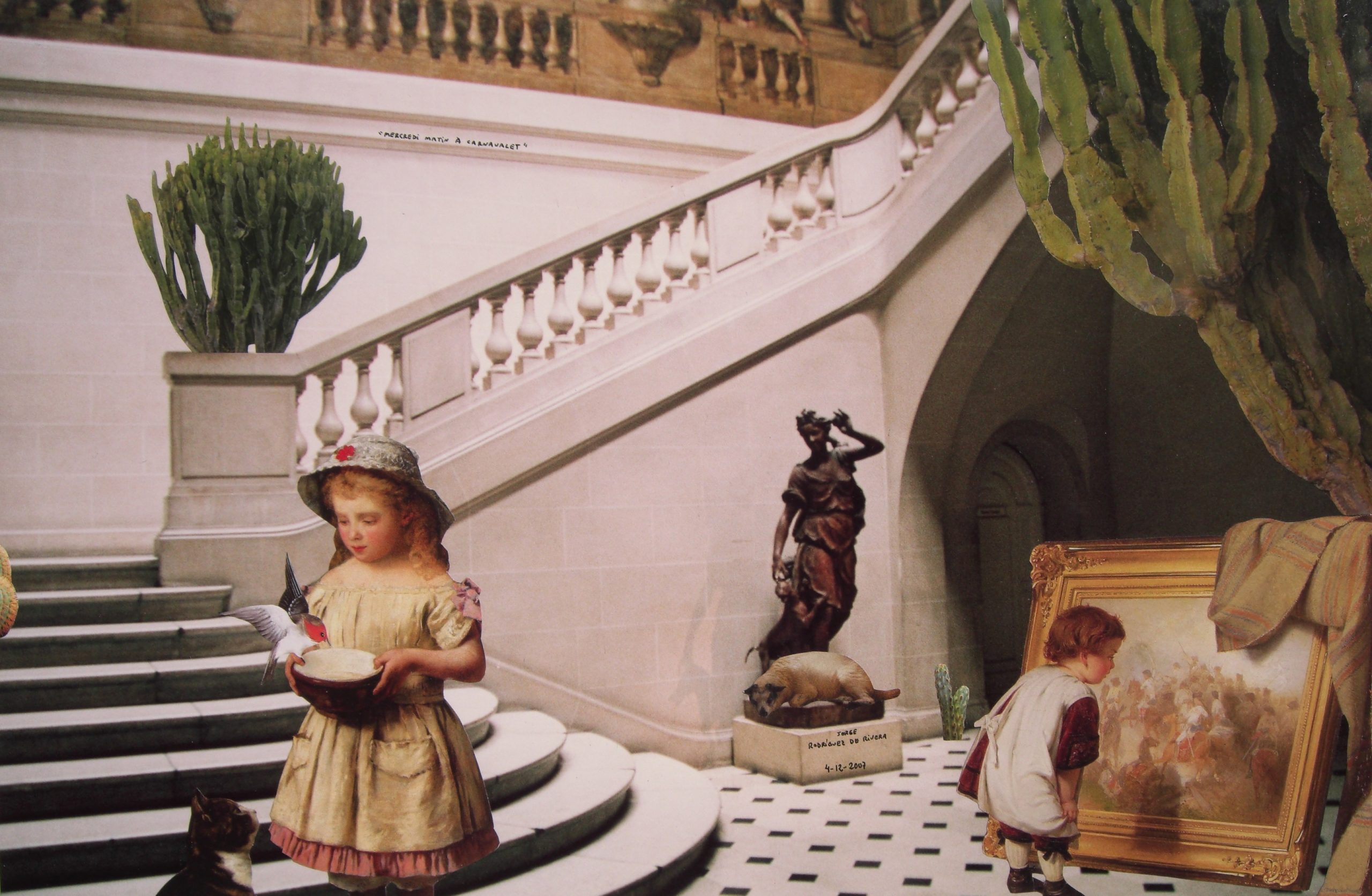
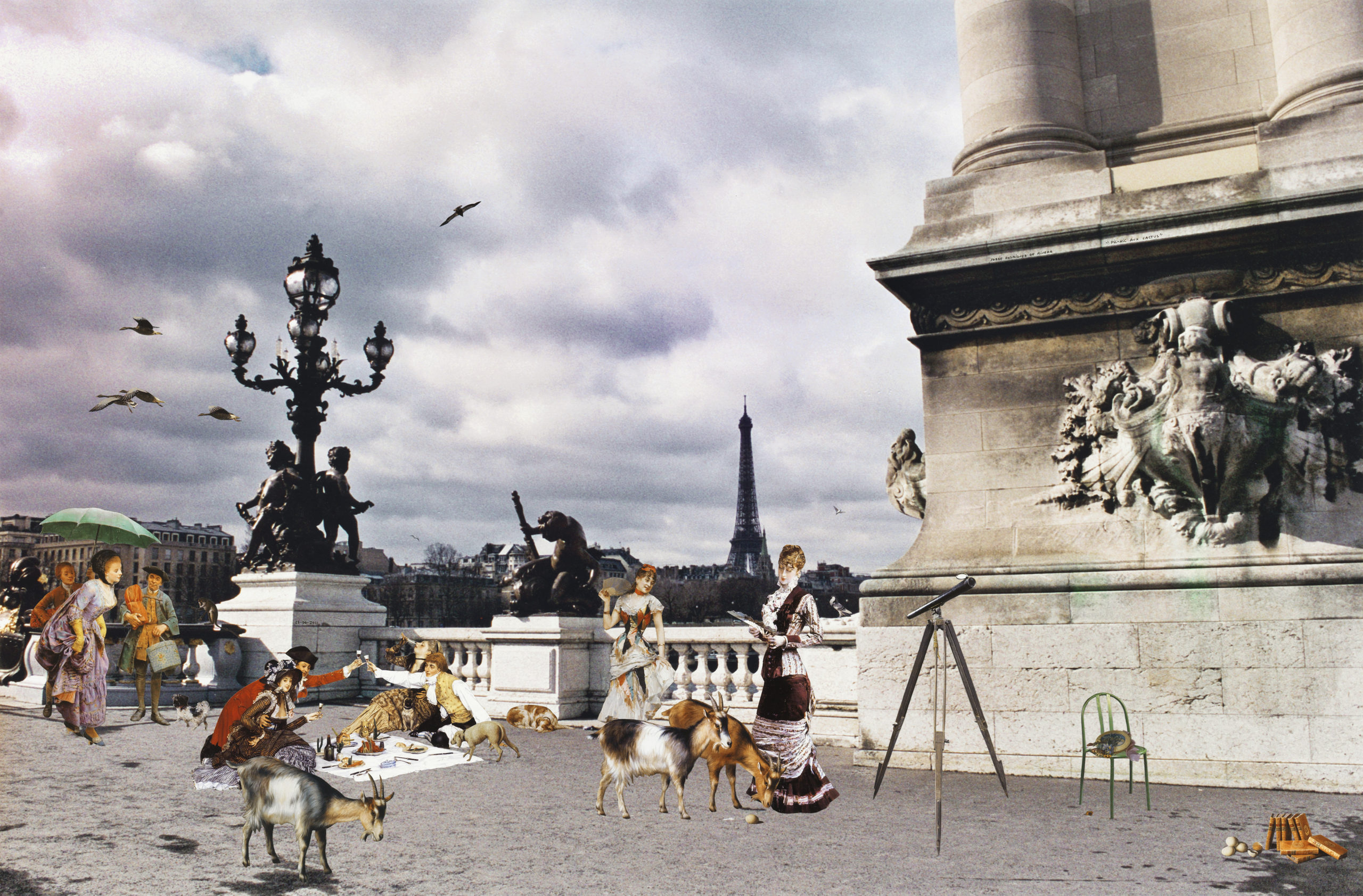
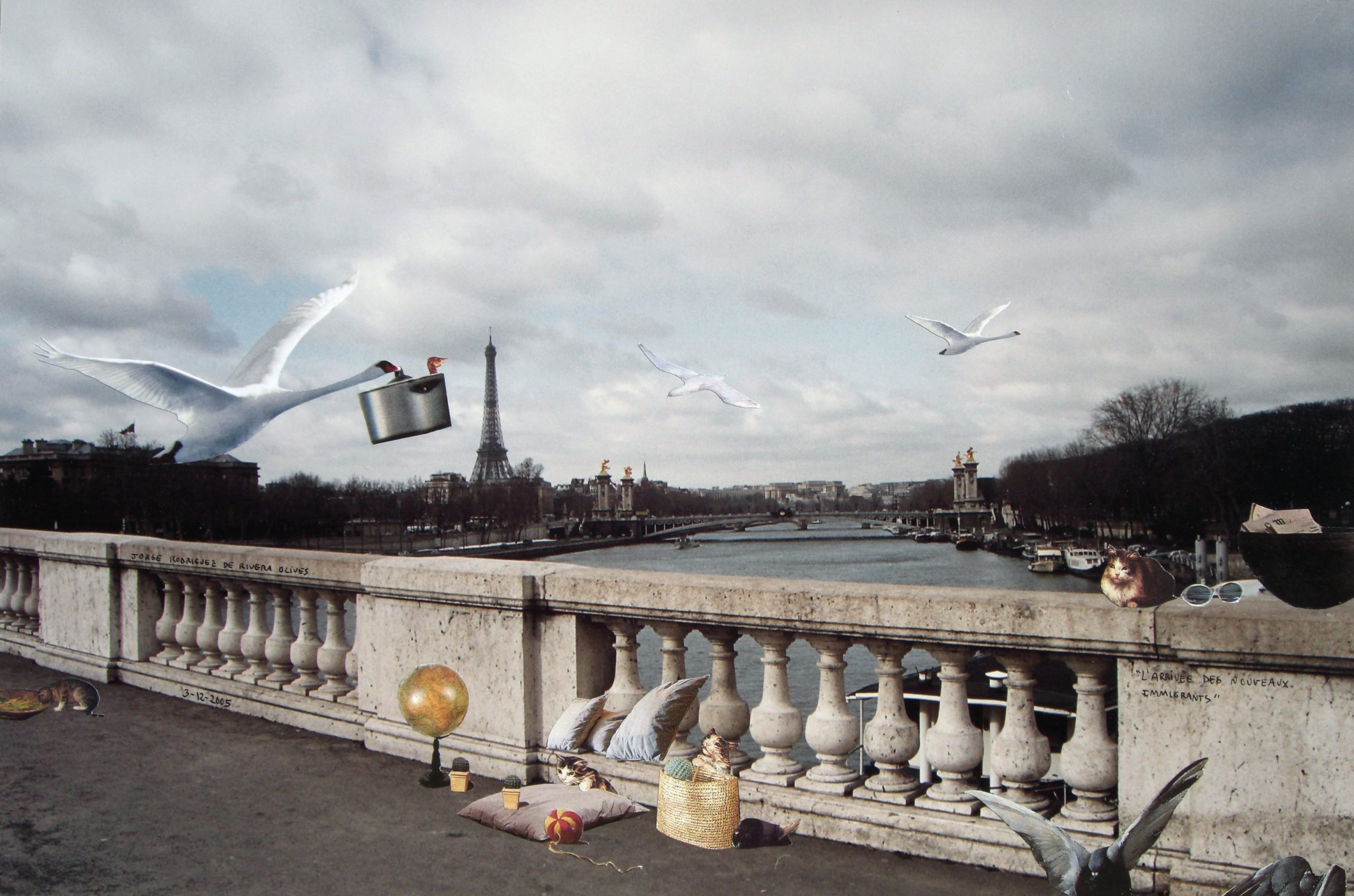
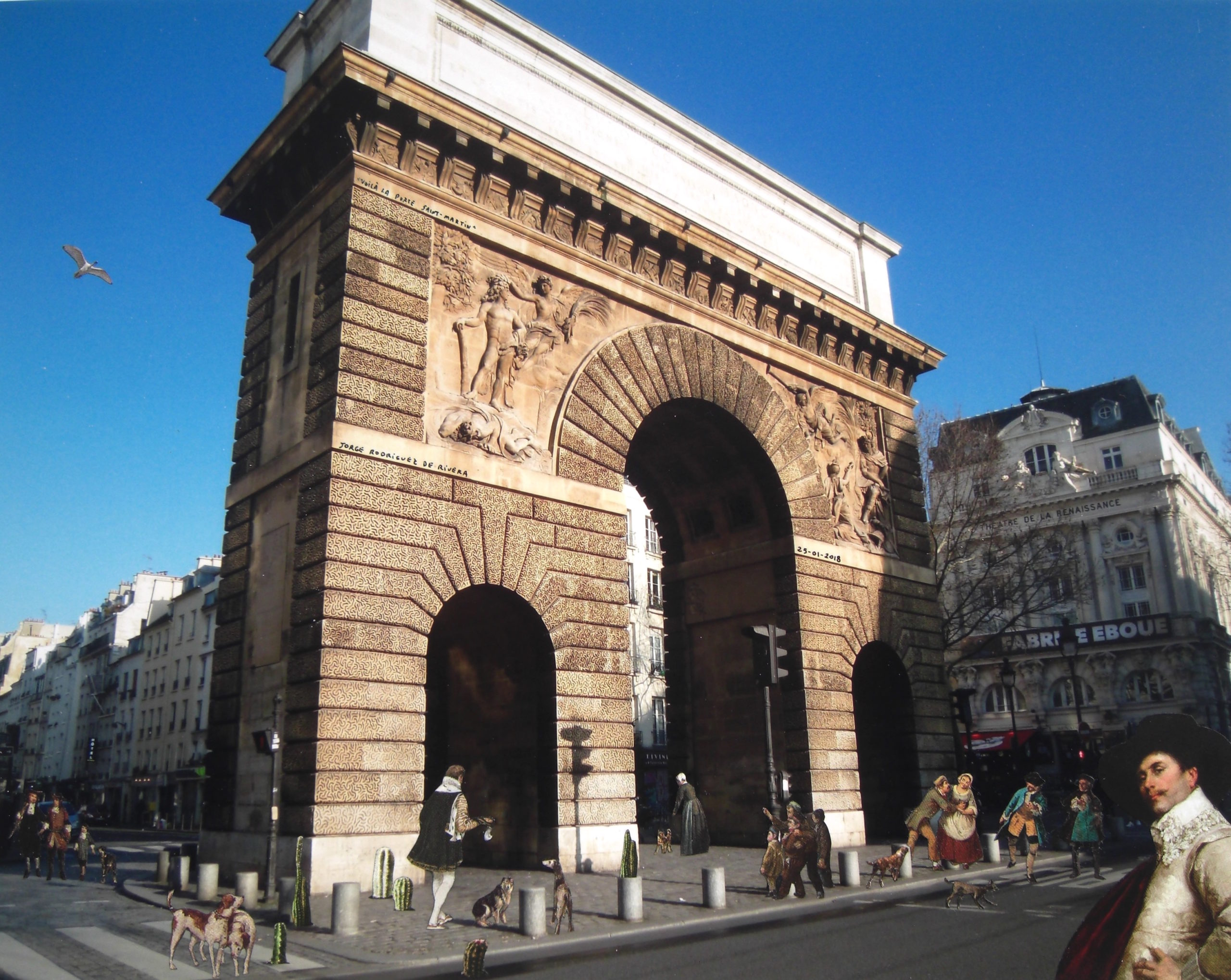
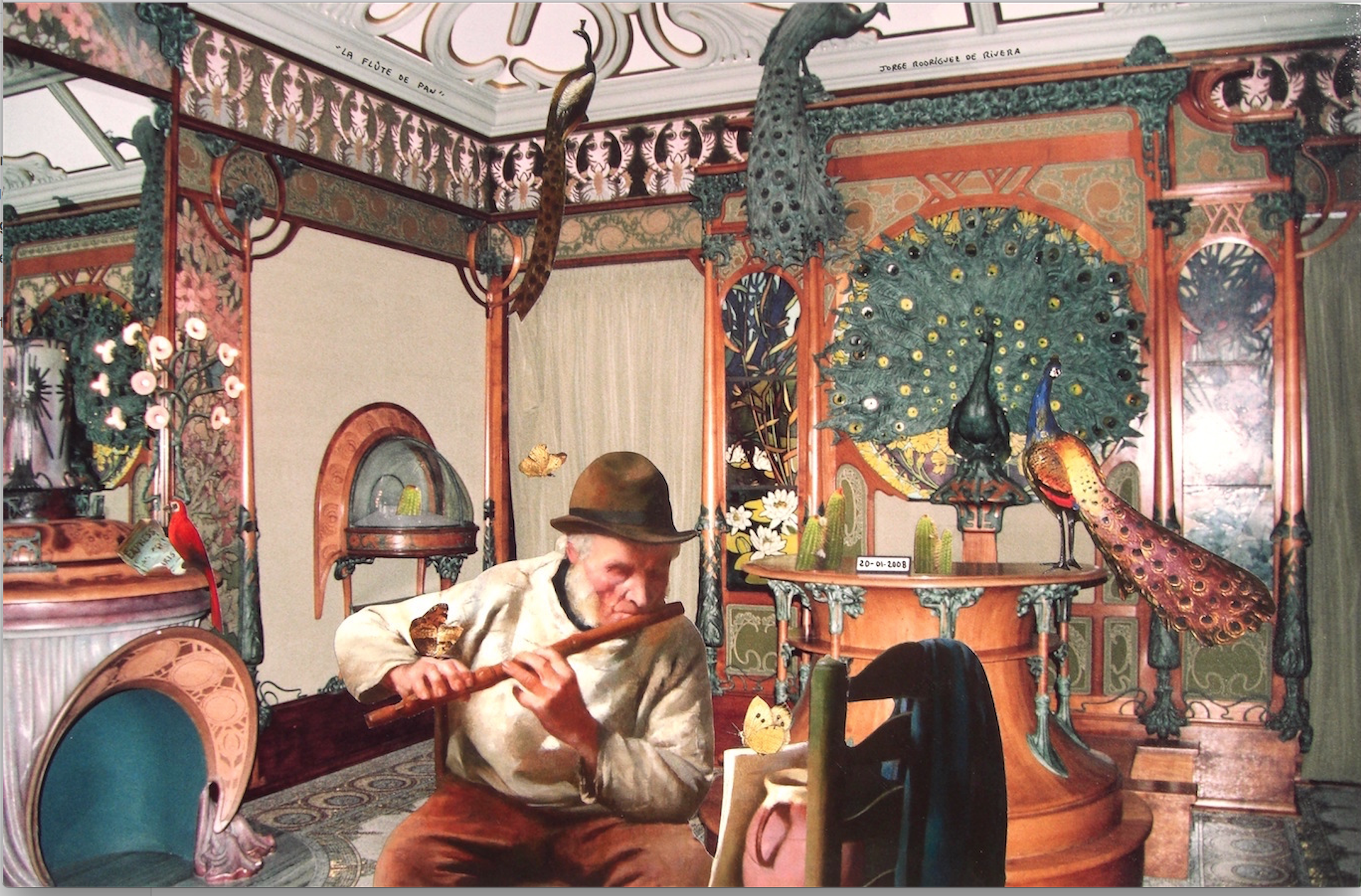
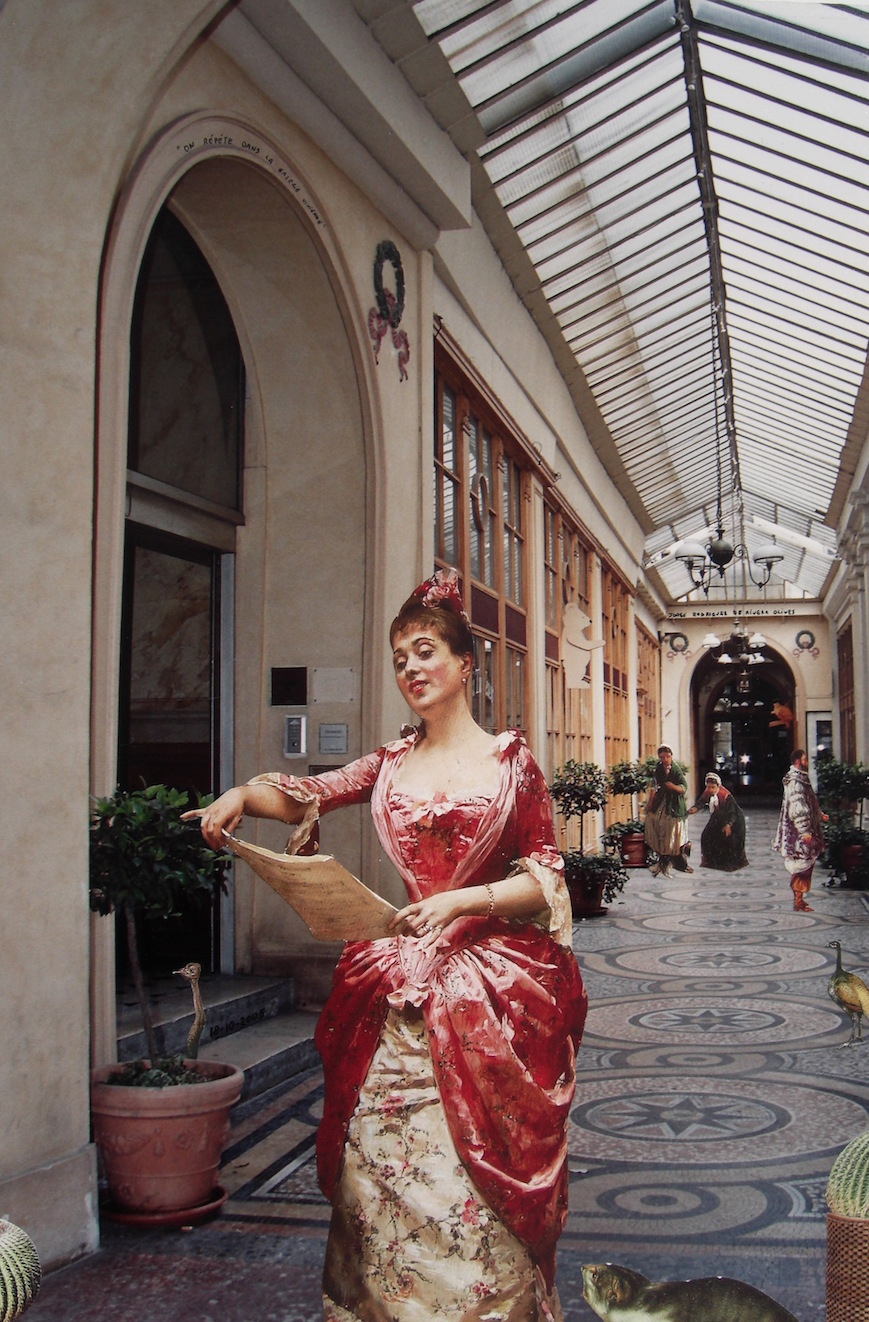
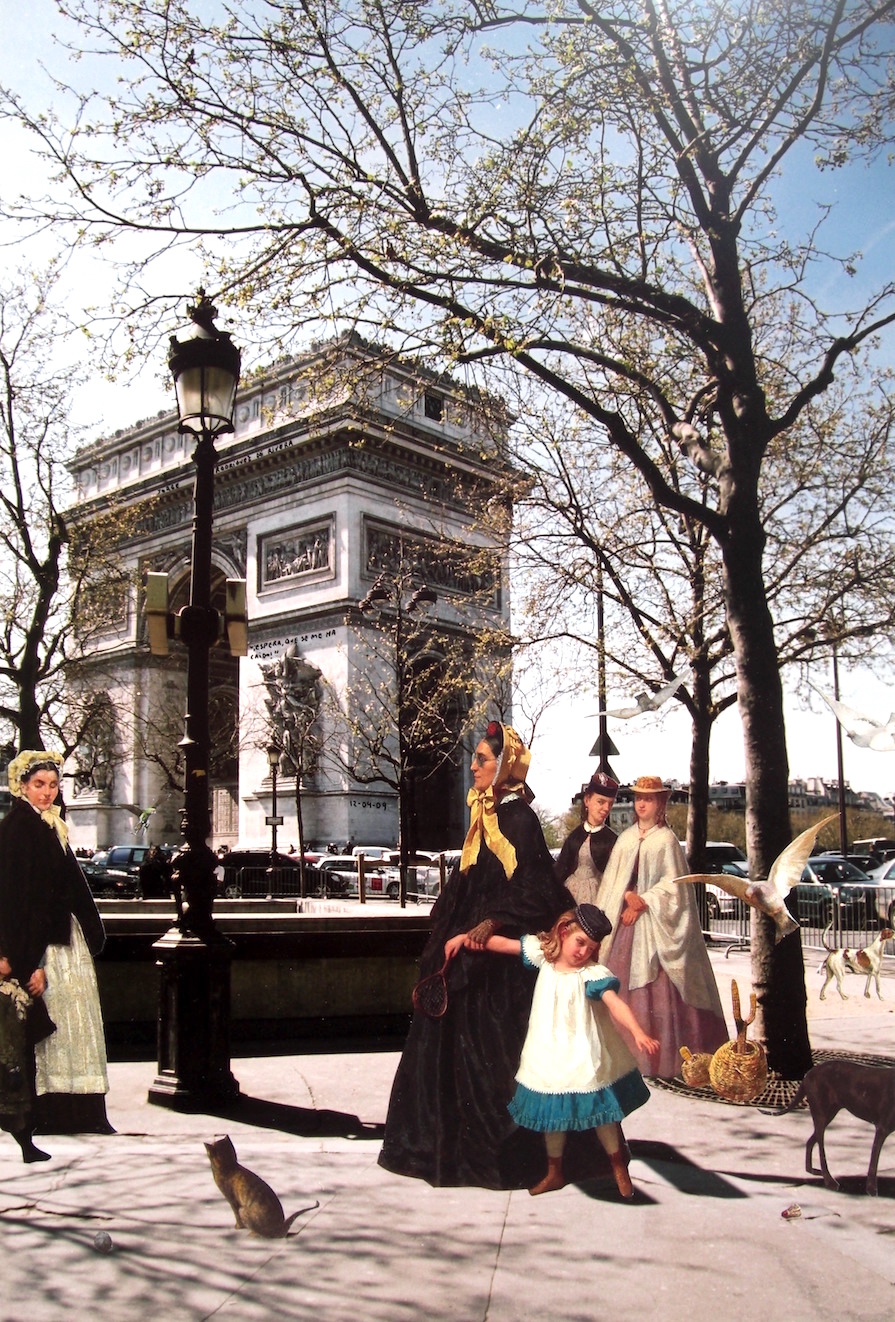
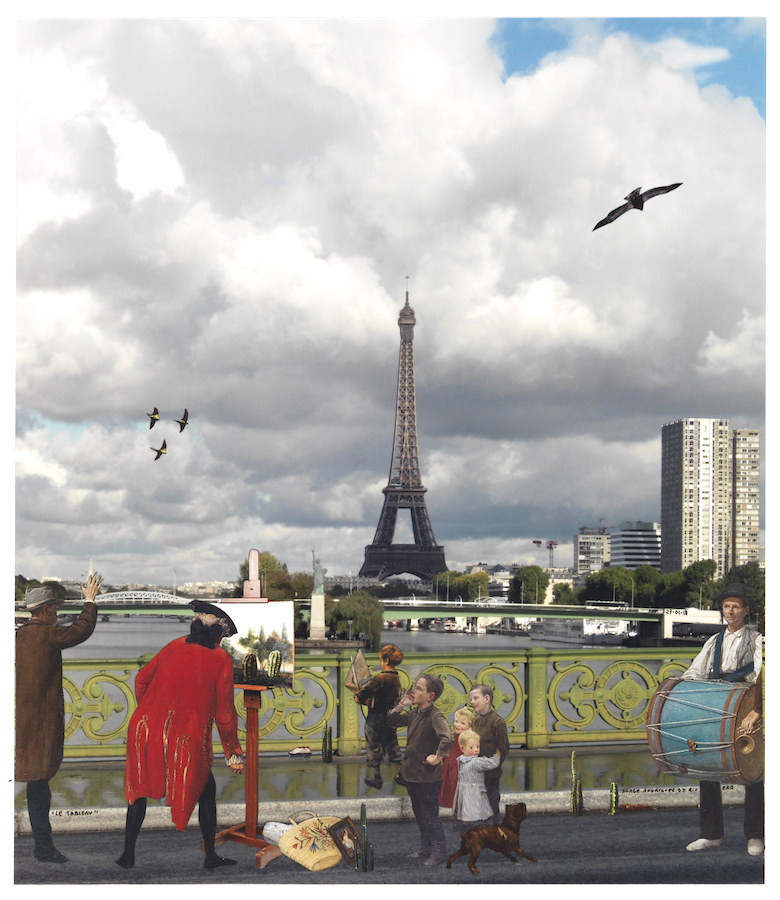 Jorge Rodriguez de Rivera’s collages using Paris as a backdrop derive from a postcard vision of the city that is, however, tinged by Surrealism. In famous Paris venues like the Alexandre III bridge, the Galerie Vivienne or the Carnavalet museum, the artist pastes a host of cut-out characters from art history books – figures from Victorian and Rococo painting, animals, birds, statues and exotic plants.
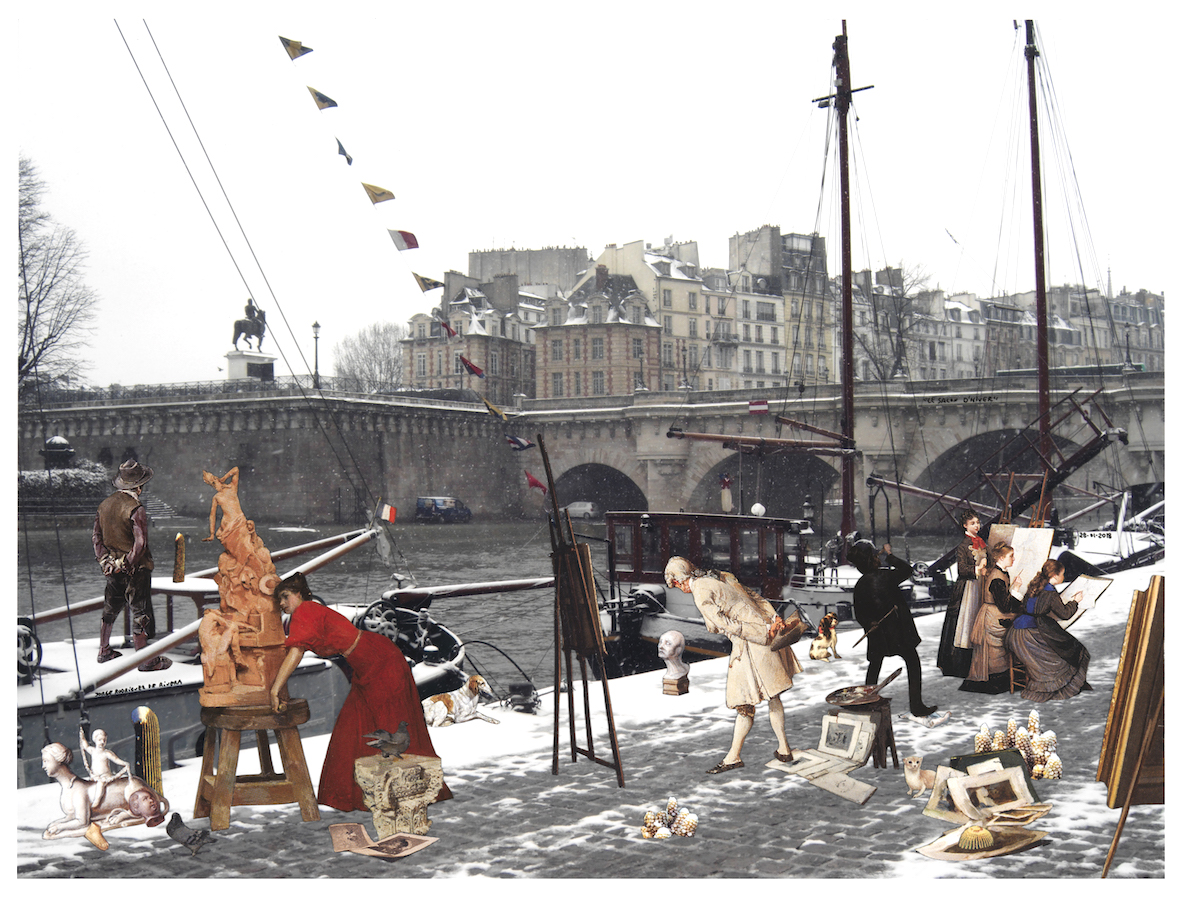 The banality of known Parisian sites is thus magically transformed by the arrival of these historical fictional fragments. They animate their static backdrops in surreal yet graceful juxtaposition, carefully situated so as to obey the unity of space and the perspectives of the photos. Paris here becomes the private playground of witty and magical fictions whose object is to amuse and delight the viewer.
Works in the Exhibition: Robert Bared – Rain Painting, Paris
Robert Bared – Winter Trees, Paris
Jorge Rodriguez de Rivera – Paris Collages, 2005-2018
Jean-Manuel Simoes – ParisNomics, 2009
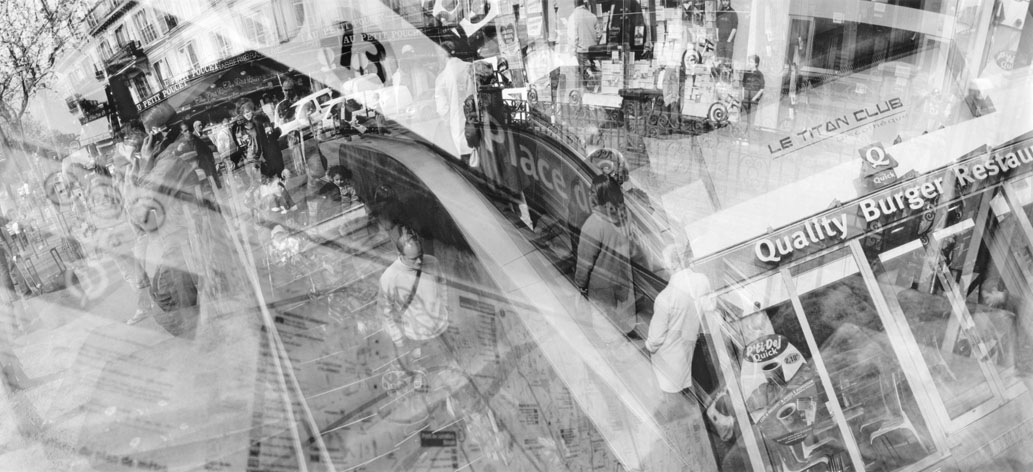
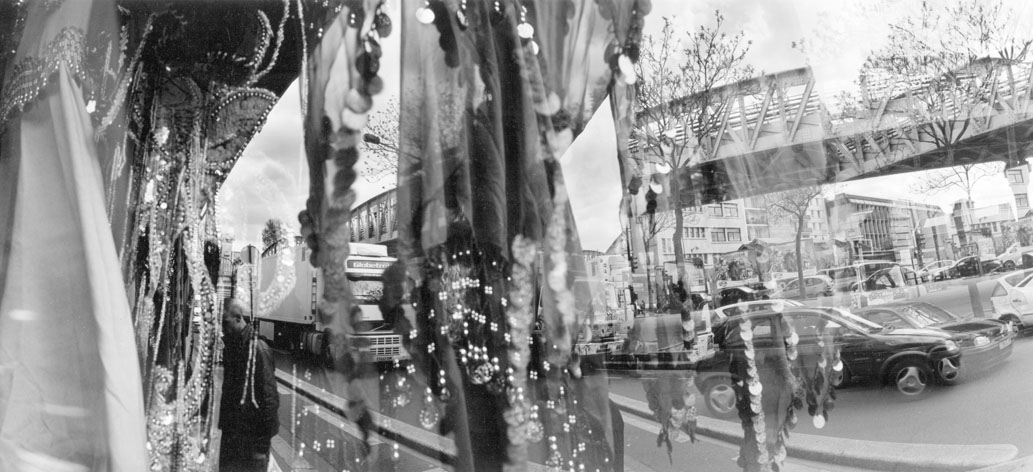
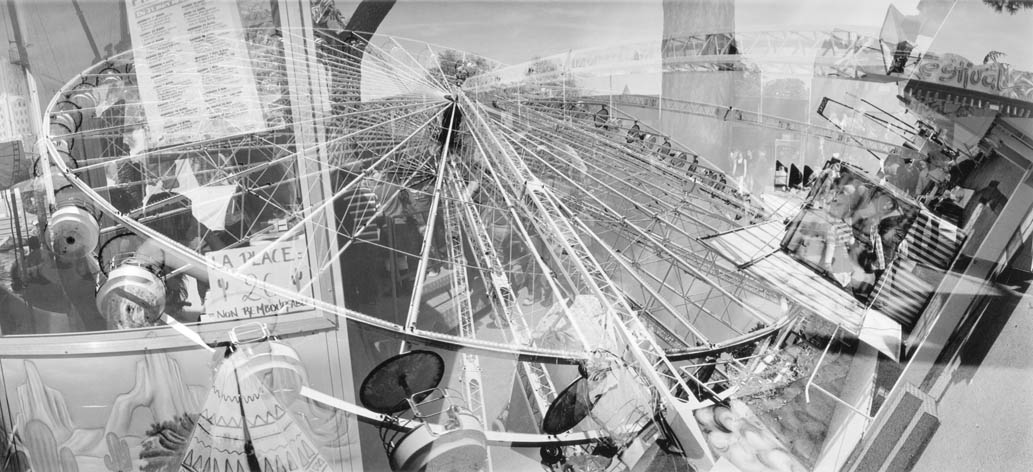
Jean-Manuel Simoes – Paris, The Show Must Go On, 2017
Jean-Manuel Simoes – Paris Kaleidoscope, 2018